Sunday, May 11, 2014

Biosignal detection using BCI

Years into the history people might not have never thought of reading a human mind or interacting with the brain of a species.  Initiatives which predates upto 1970s has come up with initiatives towards reading bio signals emitted from a person. This is termed as mind-machine interface (MMI), direct neural interface (DNI), synthetic telepathy interface (STI), brain machine interface (BMI) and Brain Computer Interaction (BCI).
Biosignal is a kind of signal which can be found from in any biological being. Biosignals can be referred to both electrical and non-electrical signals which are generated from specialised tissue, organ or a cell system in a nervous system. The main types of signals which are considered when detecting bio-electrical signals are
  • Electroencephalogram (EEG)
  • Electrocardiogram (ECG)
  • Electromyogram (EMG)
  • Mechanomyogram (MMG)
  • Electrooculography (EOG)
  • Galvanic skin response (GSR)
  • Magnetoencephalogram (MEG)
non-electrical signals that are capable of being detected are

  • mechanical signals ( mechanomyogram)
  • Acoustic signals
  • Chemical signals
  • Optic signals
Related to BCI approaches the main consideration from above signals are towards Electroencephalogram (EEG) and Magnetoencephalography (MEG).


EEG based BCI

Researchers and medical practitioners are concerned about providing non-invasive methods of implementing BCI devices and read the mind for enhanced solutions.  EEG has emerged as the mostly studied non-invasive method which also provides with ease of use, portability and low setup cost.
The main drawback of this approach is that it is more prone to disturbed with noise and also in-order to efficient results the users need to go through extensive training first.
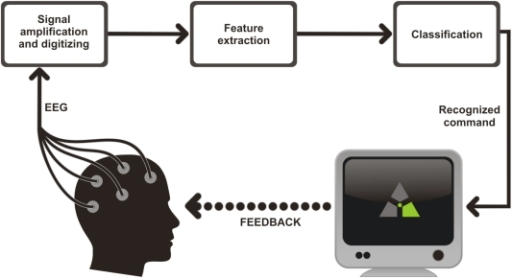
The process of extracting, amplifying, classifying and getting feedback from EEG based BCI system is as below.
3112189_pone.0020674.g001.png

Figure 1 : EEG BCI process

EEG functioning devices

XWave headset
xwave_sport-3.jpg

Figure 2 : XWave headset

NeuroSky MindFlex

tb4.jpg
 Figure 3 : NeuroSky MindFlex

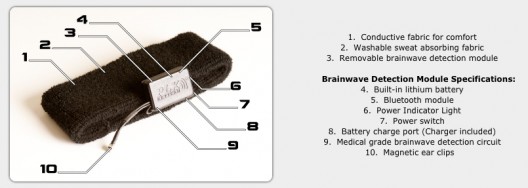
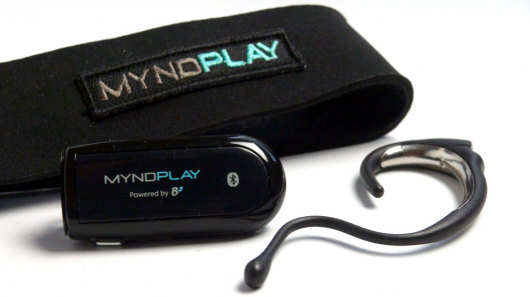
MyndPlay Headband
mynd-7.png
Figure 4 : MyndPlay

EEG Examples


Figure 5 : EEG artefacts during a range of different tasks


MEG based BCI

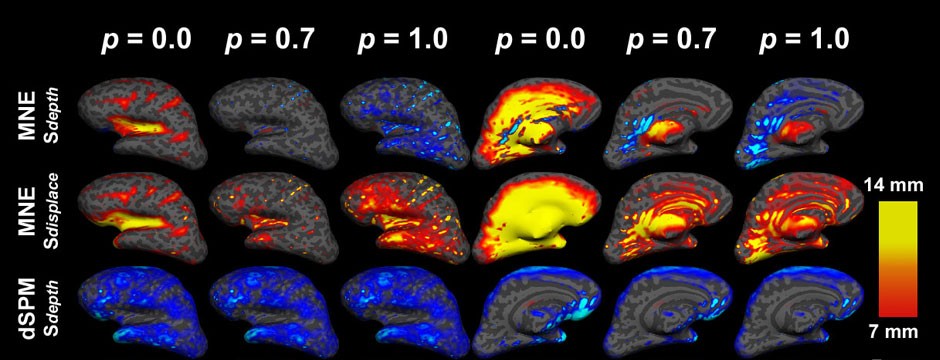
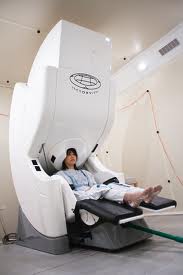
It is a functional neuroimaging technique is also a non-invasive method to map brain activities using magnetic fields produced by the brain electrical currents in brain. Magnetometers are the key players in this technology. Since brain’s magnetic field is considerably lower than in the general atmosphere it requires a magnetic shielding in order to perform magnetoencephalography.
Brain Imaging,  changes in blood flow, creating functional maps of human cortex, pinpointing sources in primary auditory, somatosensory, and motor areas are the main applications of MEG BCI in computing.

Application Use of MEG to identify the aging of human brain


 Figure 6 : MEG to identify aging of human brain
 
images
Figure 7 : VectorView

home011-940x360.jpg
Figure 8 : Brain Imagery generated with a MEG system

Referencess

Tuesday, April 22, 2014

Bank 3.0 to attract Customer 3.0

CUSTOMER 3.0
In the era of information has increased the ability to easily seek out competing services. The modern consumers are now more demanding of businesses than ever before. Customer 3.0 is a seeker for personalised services, innovative technologies and greater communications. Rather than being constrained to traditional demographic segmentations like age, gender, consumer type. Customer 3.0 falls to any modern internet user.

BANK 3.0
In his book bank 3.0 Brett King states that in the present context the banking has changed to a state where we can ask Why Banking Is No Longer Somewhere You Go But Something You Do ? This is the base concept of Bank 3.0. Which declares that banking facilities has been shrunken and brought into customers where they can work on the fly.


CUSTOMER 3.0 AND BANK 3.0
According to Marous, customer 3.0 begins their bank and credit union product shopping experience at their desk, in their car or on their couch, relying on friends and family reviews and published reviews across social media channels. Instead of walking into a local branch office and sitting down to open an account during banking hours, these customers purchase their banking services much like they purchase music, books or other products . . . online, 24/7.(Marous J. 2014) This shows that customer 3.0 expects banking to be something they does rather than being somewhere they go. This states the interrelationship among bank 3.0 and Customer 3.0.

IMPORTANCE OF CUSTOMER 3.0

https://www.youtube.com/watch?v=OMsRo9fdWAw

CUSTOMER 3.0 WITH e-BANKING and m-BANKING
Customers 3.0 carries a set of main attributes and they are listed down below with their individual relationship to e-banking and m-banking enablers of Bank 3.0.
  • Highly Informed - Unlike to the previous generations customer 3.0 has a characteristic which they try to leverage information available on internet. They are experiencing the functionalities of apps and comparison tools available on web to identify the trends, patterns and are able to compare services.
Bankers focusing on digital shopping and using analysis about the customers by monitoring their trends and patterns to keep them informed is a precise way of enabling e-banking to satisfy highly informed customer 3.0.
  • Price sensitive -  saving cost over buying or doing transactions is a major concern of customer 3.0. They search for methods on how to save money that’s the main reason.
m-Banking and e-Banking saves customers money and time they have to spend following banking activities and suggestions on investments options make bankers to reach them.
  • Socially Connected - digitally connected customers are also in touch with what other fellow people does. Therefore they look upon data shared between their peers before deciding on what to chose.
e-Banking by providing functions on identifying interests and connections between peers can bring up what they demand on time.
  • Trusting Of The Crowds - Customer 3.0 is not shy. They are very comfortable receiving and sharing reviews on social networks and within apps wherever possible. Recent research reinforces this trend with 14 percent of customers trusting advertisements while 78 percent trust peer recommendations.
Internet banking and mobile banking provides feedbacks on what crowds trend and what they demand and provide a robust path of connecting them together. Monitoring recommendation and review sites also should be a part of this kind of a job.
  • Self-Promotion - depending on the above facility customer 3.0 ultimately promotes themselves and their opinions on certain products and the ways of how they decided on them.
Bankers can groppel these self promotions to ultimately gather a huge collection of information to understand individuals and also extending to identify the society as well.
  • Demanding of Instant Gratification - They want to be able to open accounts, transact business, talk to customer service and view their financial position quickly, easily and in real time.
mainly mobile banking is a powerful enabler to provide them these kinds of services for the customer. camera functionality on a phone for mobile deposits, mobile billpay, mobile account opening and most recently, mobile balance transfer exemplifies the importance of instant gratification are the possible ways of taking over this function.
  • Security Unconscious - Customer 3.0 does not seem to be nearly as concerned about viruses, spam or phishing attacks, uploading and downloading more digital information than any other group.
Banks stiil has to think more and more on this aspect while providing quick and easy methods of e-banking and m-banking facilities.
Also along with these banks should think about the below mentioned ways of retaining the gained Customer 3.0
  • Redefining their business model
  • Engaging whenever, wherever Customer 3.0 desires
  • Changing the way products are created
  • Utilizing technology to gain greater insight into customer behaviors
  • Delivering innovative experiences
  • Rewarding loyalty

CONCLUSION
When we look on to these details it is obvious that we can come to a conclusion that the emergences of e-banking has paved a path towards taking banks towards Bank 3.0 and mobile banking has enhanced the capacity of Bank 3.0 to reach Customer 3.0 effectively and to retain them.


REFERENCES
 Wiley: Bank 3.0: Why Banking Is No Longer Somewhere You Go But Something You Do - Brett King . 2014. Wiley: Bank 3.0: Why Banking Is No Longer Somewhere You Go But Something You Do - Brett King . [ONLINE] Available at: http://as.wiley.com/WileyCDA/WileyTitle/productCd-1118589645.html. [Accessed 02 April 2014].

Marous J., Bank Marketing Strategy: Is Your Bank Ready For Customer 3.0. 2014. Bank Marketing Strategy: Is Your Bank Ready For Customer 3.0. [ONLINE] Available at: http://jimmarous.blogspot.com/2013/11/customer-30-how-banks-must-leverage-digital-mobile-media.html. [Accessed 02 April 2014].

m-banking what ? how ?

INTRODUCTION
According to wikipedia Mobile banking is a system that allows customers of a financial institution to conduct a number of financial transactions through a mobile device such as a mobile phone or personal digital assistant.
It has been evolved from the initiation of sms banking facilities provided to banks for clients. With the emergence of smart phones, WAP, 3G and 4GLTE technologies banks have reached their arms towards using  those technologies to empower and enhance the banking facilities and draw them closer to the client.

SERVICES PROVIDED
M-banking is conquering the banking facilities by providing mobilized, paced-up, easy and convenient banking services at the tips of the banking clients and it enhances the ability of banks to reach into customer and conquer their life styles and provide services at their door steps.
Some services they provide are


PROS AND CONS
Almost everything has its own pros and cons. Even highly sophisticated technologies may have their own pros and cons. Here is a review on Pros and Cons of m-banking which is a technology to perform finance related functions on a mobile device like a Smartphone or tablet. With the use of a mobile device, the user can perform mobile banking via call, text, website, or an app.

PROS
  • Convenience
Ability to use the banking services any time anywhere increases the amount of convenience a bank client can have and also the bank gets benefited from getting the ability to reduce the increasing cues in the branches or ATMs.
  • Mobilizing banking activities
In the traditional banking scenarios banking services was provided as a non-mobile service where the client has to go to client. M-banking has made the bank mobile and omnipresent within the clients.
  • Multitasking
Bank while you work is a major enabler which was generated out of m-banking do multiple functions at once using a mobile enables this aspect.
  • Enhanced Security
Mobile banking is said to be secure than internet or online banking methods that are currently in the picture.
  • Around the clock banking facilities
Either you are a busy person or a person who lives long way from the bank the bank is open 24 * 7 for the banking functionalities without any cues or counters.

CONS
  • Vulnerability to scams
m-banking users can be exposed to fake sms messages which may be spams or scams which will mislead them.
    * how to avoid :- M-banking users might be aware that such things like scams are there and be wise to respond only to mostly trusted messages and inquire the bank directly on their hotlines.
  • Loss of mobile devices
Losing a device which is been used by a m-banking service user may put the account in danger like losing pin number, loosing identity on mobile and loosing other sensitive information.
    * how to avoid :- Keeping the sensitive data on mobile backed up and use protection methods on keeping pin numbers and other details encrypted.
  • Excessive Charges
Certain m-banking sevice providers charge the users for the sevices they provide. If the users subscribe for features which they do not use that will be a waste.
    * how to avoid :- Understand and use only the services that is mostly usable for the user.

REFERENCES
Mobile banking - Wikipedia, the free encyclopedia. 2014. Mobile banking - Wikipedia, the free encyclopedia. [ONLINE] Available at: http://en.wikipedia.org/wiki/Mobile_banking. [Accessed 01 April 2014].

Advantages and Disadvantages of Mobile Banking | Mauco Internet Consultants. 2014. Advantages and Disadvantages of Mobile Banking | Mauco Internet Consultants. [ONLINE] Available at: http://mauconline.net/2013/03/07/advantages-and-disadvantages-of-mobile-banking/. [Accessed 01 April 2014].

Tuesday, February 18, 2014

Internship at Network Operating Center UCSC

During my third year second semester I was privileged to work as a Systems Administration intern. It was a time which I was exposed to work with new people with different skills and expertise.

Under the supervision of Dr. Ajantha Atukorale senior lecturer of UCSC and Mr. A. S. C. M. B. Attanayake IS manager UCSC I was directed through various tasks related to Networking and Systems administration.  

Below are the tasks which I was assigned during my internship period.
  • Task 1 -     finding a suitable Operational Solution for HP thin client PC’s which are currently abandoned from use.
  • Task 2 –     fujitsu server mounting and Installation with Mr. devana
  • Task 3 –     2nd Year Software Development Group Project Hosting Server Installation
  • Task 4 –     Install and Configure a Debian server with Gausian
  • Task 5 –     Research on how to deploy Openldap in a linux system.
  • Task 6 –     Install Zeroshell and Check for its browser compatibility.
  • Task 7 -    Library Media reference PC installation
  • Task 8 –     IEEE Extreme programming duty
  • Task 9 –     Ubuntu server 12.04 with Mooshak online examination  system for Computer Science Society Lanka
  • Task 10 –   Install a network monitoring tool in a server
  • Task 11 –   ICTER Conference technical support
  • Task 12 –   Develop and Academic Management System for Dr. Ajantha Atukorale
  • Task 13 –   Server room cable reordering and migrating VM servers into new hard disks
These Tasks evolved through technologies like
  • Monitoring Tools    - Cacti 0.8.8b, NagiOS Core, Observium
  • Operating Systems - CentOs 6.4, Debian 6.0, Esxi 5.5
  • Web Services         - Apache 2.2, MySql, PosgreSql, PHP 5, VSFTPD, Mooshak
  •  Other                    - Gausian, Vsphere, Aruba wifi controller, Hyperterminal
Click to view the final report
Final Presentation

Feasibility Study on Virtual Disk Space via Networked PCs

After some time of silence It is time for me to put up some work I did during my third year at university of Colombo School of Computing as and undergraduate of BICT.

First i would like to publish my feasibility study which I did as a prerequisite to get selected to the forth year.

It was a study on how to extract hard disk spaces from remotely and geographically separated PCs and make them useful for an Organization. This was focused on applying the results extracted in the computer laboratories of UCSC.


Download Virtual Disk Space viaNetworked PCs (NVDS) 

Learning Outcomes
  • Improved researching skills
  • Real world problem identification and solution finding
  • Research methods
  • Feasibility studying principles
  • Working with multiple supervisors